
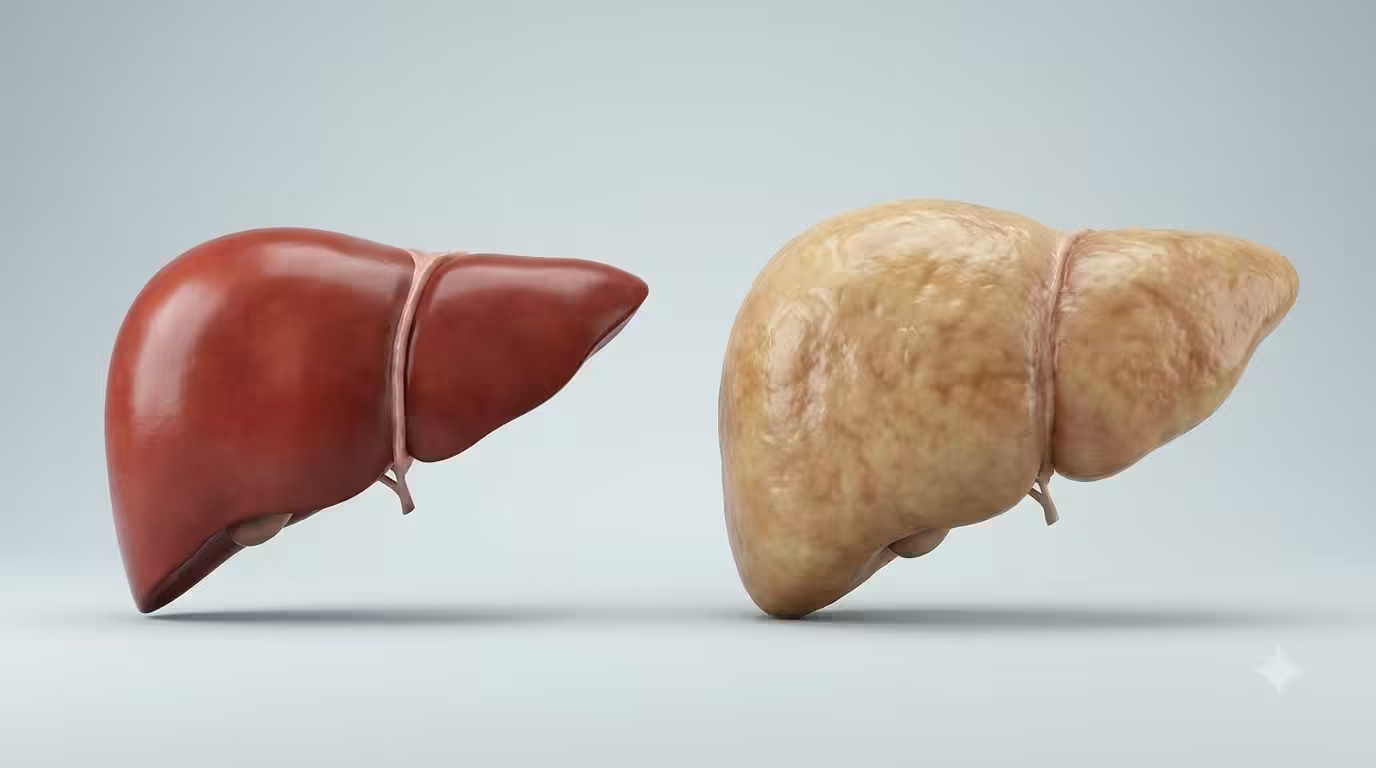
Fatty liver disease means excess fat has built up inside the liver. When it is linked to metabolic problems such as excess weight, type 2 diabetes or abnormal blood fats, rather than heavy drinking, doctors now call it MASLD (metabolic dysfunction-associated steatotic liver disease), formerly known as NAFLD. It is often silent, and in many people lifestyle change can improve it.
This guide explains fatty liver symptoms, the causes of fatty liver, how doctors diagnose it, and what the evidence says about reversal, diet and treatment, with a focus on what readers in India should know. It is reviewed under our Editorial & Medical Review Policy.
Key takeaways
- Fatty liver (MASLD, formerly NAFLD) is fat build-up in the liver linked to metabolic risk factors. It is usually silent.
- A pooled analysis of Indian studies estimated that about 38.6% of adults, roughly one in three, have it.
- Most people have simple fatty liver. A smaller group has MASH, the form with inflammation that can lead to scarring and cirrhosis.
- Diagnosis uses blood tests and imaging. A liver biopsy is reserved for selected people.
- Weight loss, a Mediterranean-style diet and regular exercise are the foundation of treatment. Guidelines link 10% or more weight loss with improvement in scarring.
- Two medicines are FDA-approved for MASH with moderate to advanced scarring, but availability in India differs.
- Heart disease is the most common cause of death in people with fatty liver.
What Is Fatty Liver Disease?
Fatty liver disease is a condition in which excess fat builds up in liver cells. MASLD is the current international name for fatty liver linked to metabolic risk factors, and it replaced the older term NAFLD in 2023. A more serious form, MASH, adds liver inflammation and cell damage.
The medical word for fat in the liver is steatosis. In the usual definition, MASLD means at least 5% of the liver is fat, together with at least one cardiometabolic risk factor such as obesity, type 2 diabetes, abnormal blood fats or high blood pressure, and no other main cause. The name was changed by a consensus led by three large international liver associations because the old term relied on what the disease is not (non-alcoholic) and was seen as stigmatising by many panellists.
There are two main forms, according to NIDDK:
- MASL (simple fatty liver, formerly NAFL): fat in the liver with little or no inflammation. It typically does not progress to liver damage, although it can cause pain if the liver enlarges.
- MASH (formerly NASH): fat plus inflammation and liver cell damage. This can cause scarring (fibrosis) and may lead to cirrhosis, which can lead to liver cancer.
Most people with fatty liver have the simple form, and only a small number have MASH.
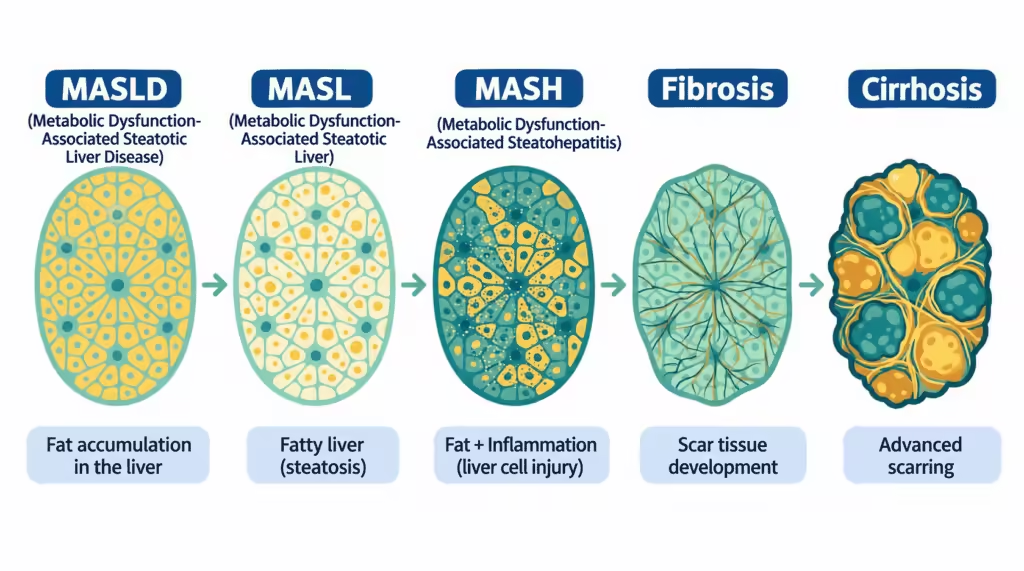
| Older term | Current term | What it means |
|---|---|---|
| NAFLD | MASLD | Fat in the liver linked to metabolic risk factors |
| NAFL | MASL | Fat with little or no inflammation |
| NASH | MASH | Fat with inflammation and liver damage |
| (new category) | MetALD | MASLD in people who drink more alcohol than the MASLD limit |
The 2023 consensus also created MetALD for people with metabolic fatty liver who drink roughly 140 to 350 grams of alcohol a week (women) or 210 to 420 grams a week (men).
Which name will you see in India? You will see both. International societies and the European guidelines use MASLD and MASH. The Indian National Association for the Study of the Liver (INASL) advised in 2023 that India continue using NAFLD and NASH until wider consensus is reached, and its guidance paper was written for Indian practice. NIDDK uses the terms side by side. For a plain-language comparison, see MASLD vs NAFLD.
How Common Is Fatty Liver Disease in India?
A systematic review of Indian studies estimated that about 38.6% of adults, roughly one in three, have fatty liver, with higher rates in people who have obesity, diabetes or other risk factors. Estimates vary by region and method, so treat the figure as an approximate national picture rather than an exact count.
This meta-analysis by Elhence and colleagues pooled 54 adult datasets covering 23,581 people and found an adult prevalence of 38.6% (95% confidence interval 32% to 45.5%). The published abstract reports 28.2% in community-based data and 40.8% in hospital-based data. Among children the pooled estimate was 35.4%, with about 63.4% in children who were obese and 12.4% in those who were not.
Two cautions apply. First, the included studies relied on ultrasound, which can miss early fatty liver, so true prevalence may be higher. Second, earlier Indian estimates ranged from 9% to 53%, reflecting differences in who was studied and how.
Risk is concentrated in people with diabetes. NIDDK reports that studies suggest one-third to two-thirds of people with type 2 diabetes have fatty liver.
What Are the Symptoms of Fatty Liver?
Most people with fatty liver have no symptoms. When symptoms occur, they are usually vague, such as tiredness or discomfort in the upper right side of the abdomen. Because it is silent, fatty liver is often first suspected when liver blood tests are raised or fat is seen on an ultrasound done for another reason.
NIDDK describes it as a silent disease with few or no symptoms, and people may have no symptoms even after cirrhosis develops. The American College of Gastroenterology notes that many people have no symptoms or exam findings, and that raised liver tests or fat on ultrasound should prompt evaluation.
During an exam, doctors may look for an enlarged liver, dark skin patches over the knuckles, elbows and knees (a sign of insulin resistance), and, in cirrhosis, an enlarged spleen, fluid in the abdomen and muscle loss.
When to see a doctor: make an appointment if you have lasting symptoms that worry you, and ask about a liver check if you have diabetes, excess weight or abnormal cholesterol, even with no symptoms. Our guide to fatty liver symptoms covers this in more detail.
What Causes Fatty Liver Disease?
Fatty liver is mainly linked to metabolic conditions: overweight or obesity, insulin resistance or type 2 diabetes, and abnormal blood fats. Genes, diet and gut bacteria may also play a role. Heavy alcohol use, some medicines and rare disorders can also cause fat build-up, so doctors check for these before making the diagnosis.
According to NIDDK, you are more likely to develop fatty liver if you have:
- overweight or obesity
- insulin resistance or type 2 diabetes
- high triglycerides, high LDL cholesterol or low HDL cholesterol
- metabolic syndrome (a group of traits that includes a large waist, abnormal blood fats, high blood pressure and raised blood sugar)
Other contributors include certain genes, diets high in sugar (researchers are studying fructose in particular) and differences in gut bacteria. Other causes of fat in the liver include heavy alcohol use, rapid weight loss or malnutrition, some medicines (such as corticosteroids, some HIV treatments, estrogens and certain cancer drugs) and rare genetic diseases.
Body weight alone is not a perfect guide. NIDDK notes that, on average, Asian Americans with fatty liver have a lower BMI than non-Hispanic white people with it, which suggests that a normal-looking weight does not rule it out. Read more on the causes of fatty liver.
How Is Fatty Liver Diagnosed?
Doctors diagnose fatty liver using your medical history, a physical exam, blood tests and imaging such as ultrasound. They also rule out other causes, especially alcohol. A liver biopsy is the only test that can prove MASH, but it is not needed for everyone.
The NIDDK diagnosis guide describes how each step works:

| Test | What it can show | Limits |
|---|---|---|
| Blood tests (ALT, AST) | Raised liver enzymes may raise suspicion | Other conditions also raise enzymes |
| FIB-4 or APRI scores | Calculated from routine blood tests to help identify or rule out advanced scarring | Scores support, not replace, a doctor’s assessment |
| Ultrasound, CT or MRI | Show fat in the liver | Cannot show inflammation or scarring, so cannot separate simple fatty liver from MASH |
| Elastography (vibration-controlled transient elastography, shear-wave, MR elastography) | Measures liver stiffness, which can signal scarring | Used in some cases |
| Liver biopsy | Only test that can prove MASH and show severity | Invasive, so reserved for selected people |
Ultrasound reports often describe fat in grades. Because imaging cannot show inflammation or scarring, a grade alone does not tell you how much damage is present. See fatty liver grades explained and our guide to the tests to diagnose fatty liver.
Who should be tested?
European guidelines do not recommend routine screening of the general population. They advise targeted checking in people with type 2 diabetes, central obesity with another metabolic risk factor, or persistently raised liver enzymes, using a stepwise approach that starts with the FIB-4 score.
Can Fatty Liver Be Reversed?
In many people, yes, at least in part. Sustained weight loss, a healthier diet and regular exercise can reduce liver fat, and larger weight loss can improve inflammation and even scarring. Cirrhosis is permanent damage, so the earlier fatty liver is found and managed, the better the outlook.
NIDDK states that weight loss can reduce liver fat, inflammation and scarring, and that physical activity helps even without weight loss. Cirrhosis, by contrast, is scarring that is permanently damaging.
| Weight loss (of body weight) | Benefit reported in guidelines |
|---|---|
| About 3% to 5% | Reduces fat in the liver (NIDDK); modest loss is also advised for people of normal weight (EASL) |
| About 5% to 10% | Reduces liver inflammation (EASL) |
| 10% or more | Needed to improve or reverse scarring (EASL) |
Sources for the table: NIDDK and a summary of the EASL-EASD-EASO guideline. Targets differ from person to person, so agree yours with your doctor.
Two safety points matter. Doctors recommend losing weight gradually, because rapid weight loss and malnutrition can make liver disease worse. And NIDDK notes that regaining weight may cause simple fatty liver to progress to MASH. For practical steps, see how to reverse fatty liver.
Fatty Liver Diet, Exercise and Alcohol
Guidelines recommend a Mediterranean-style eating pattern, rich in vegetables, legumes, fish, nuts and olive oil, while limiting ultra-processed foods, sugary drinks and alcohol. Aim for at least 150 minutes of moderate activity a week, which helps the liver even without weight loss.
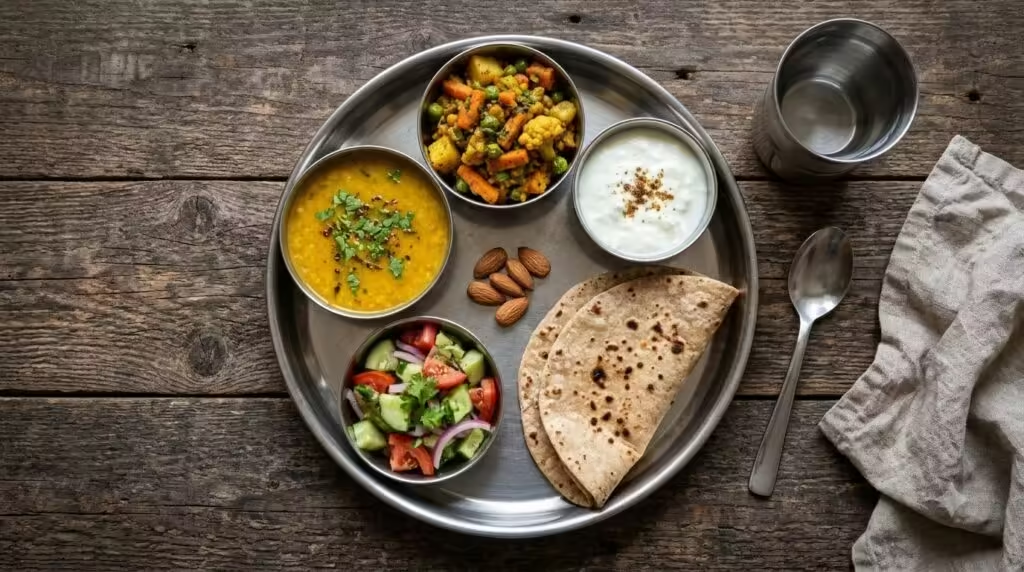
Diet. The EASL-EASD-EASO guideline, as summarised by its authors, names the Mediterranean diet as the dietary model of choice and advises minimising ultra-processed foods, sugar-sweetened drinks and alcohol. NIDDK also lists a high-sugar diet and sugary beverages among lifestyle factors doctors ask about. In an Indian kitchen, this can mean building meals around dals and other legumes, vegetables and whole grains, and cutting back on cold drinks, sweets and packaged snacks. Our fatty liver diet plan gives more detail.

Exercise. European guidelines advise at least 150 minutes of moderate or 75 minutes of vigorous activity per week. NIDDK notes that physical activity alone is beneficial, even without weight loss.
Alcohol. The European guidelines discourage any alcohol intake in people with MASLD. Fatty liver can also coexist with alcohol-related liver disease, and no test can easily tell how much each contributes. The MASLD definition itself applies only when alcohol intake is limited, below about 140 grams a week for women and 210 grams a week for men.
How Is Fatty Liver Treated?
Lifestyle change (weight loss, diet, exercise and control of diabetes, cholesterol and blood pressure) remains the foundation of treatment. For MASH with moderate to advanced scarring, two medicines are approved by the US FDA, resmetirom in 2024 and semaglutide in 2025, but availability in India differs and they are not for everyone.
The FDA granted accelerated approval to resmetirom in March 2024 for adults with non-cirrhotic MASH and moderate to advanced scarring, to be used with diet and exercise. Its most common side effects were diarrhoea and nausea, and it should be avoided in decompensated cirrhosis. In the MAESTRO-NASH trial, MASH resolved in about 26% to 30% of people on resmetirom versus 10% on placebo at 52 weeks. In August 2025 the FDA granted accelerated approval to semaglutide 2.4 mg (Wegovy) for adults with MASH and moderate to advanced fibrosis, excluding cirrhosis. Both approvals rest on early biopsy results, and longer studies of clinical benefit are ongoing.
The European guidelines advise that, where locally approved, resmetirom should be considered in non-cirrhotic MASH with significant scarring, that incretin-based medicines can be used for type 2 diabetes or obesity where indicated, and that bariatric surgery is an option in people with MASLD and obesity.
What this means in India: as of mid-2026, trade reports describe resmetirom still in Indian clinical trials, so availability may change. Ask your gastroenterologist which options are available and appropriate for you.
What Are the Complications of Fatty Liver?
Most people with simple fatty liver do not develop liver complications, but those with MASH can progress to scarring, cirrhosis and liver cancer. Heart disease is the most common cause of death in people with fatty liver, and the condition also raises the risk of type 2 diabetes and metabolic syndrome.
NIDDK explains that people with simple fatty liver typically do not develop liver complications, although they carry a higher risk of other health problems. People with MASH can develop cirrhosis and liver cancer, and if cirrhosis leads to liver failure, a liver transplant may be needed. People with MASH also have an increased chance of dying from liver-related causes.
Beyond the liver, fatty liver is linked with cardiovascular disease, type 2 diabetes, metabolic syndrome, high blood pressure and abnormal cholesterol and triglycerides. That is why European guidelines advise managing these conditions alongside the liver. Read more about the complications of fatty liver.
Frequently Asked Questions About Fatty Liver Disease
Is fatty liver disease serious?
It can be. Simple fatty liver usually does not cause liver complications, but MASH can lead to scarring, cirrhosis and liver cancer, and people with fatty liver also face a higher risk of heart disease and type 2 diabetes. Early assessment by a doctor helps identify who is at higher risk.
Can fatty liver be reversed?
In many people the fat can be reduced, and larger weight loss can improve inflammation and scarring. Guidelines link roughly 5% weight loss with less liver fat, 5% to 10% with less inflammation and 10% or more with improvement in scarring. Cirrhosis is permanent damage, so early action matters.
Can a slim person have fatty liver?
Yes. Fatty liver is tied to metabolic health, not only body weight. NIDDK notes that Asian Americans with the condition have, on average, a lower BMI than non-Hispanic white people with it, and European guidelines say modest weight loss of 3% to 5% can help people of normal weight.
What is the difference between MASLD and NAFLD?
MASLD is the 2023 international name for what was called NAFLD. The new name focuses on metabolic risk factors rather than defining the disease by what it is not, and the definition requires at least one cardiometabolic risk factor. Indian guidance from INASL in 2023 continued to use NAFLD, so you may see both terms.
Can I drink alcohol if I have fatty liver?
European guidelines discourage any alcohol intake in people with MASLD. A separate category, MetALD, describes people with metabolic fatty liver who drink more than the MASLD limit, and fatty liver can exist alongside alcohol-related liver disease. Ask your doctor what is safe for you.
Is there a medicine for fatty liver?
Lifestyle change is the foundation of treatment. For MASH with moderate to advanced scarring, the US FDA has approved resmetirom (2024) and semaglutide (2025), but availability varies by country and neither suits everyone. Do not start supplements or herbal remedies without medical advice, as some can harm the liver.
Consult a qualified doctor.
This article is educational and does not replace medical advice, diagnosis or treatment. Please speak with a gastroenterologist or your physician about your own liver health, tests and treatment options. To learn how we choose sources and review medical content, read our Editorial & Medical Review Policy.
Sources & References
- Rinella ME et al. A multisociety Delphi consensus statement on new fatty liver disease nomenclature. J Hepatol 2023;79(6):1542-1556
- Tacke F et al. EASL-EASD-EASO Clinical Practice Guidelines on the management of MASLD. J Hepatol 2024;81(3):492-542
- Horn P, Tacke F. Key takeaways from the updated European MASLD guidelines (eGastroenterology 2025), summary via News-Medical
- EASL-EASD-EASO guideline news release on lifestyle advice, EurekAlert
- Duseja A et al. INASL Guidance Paper on Nomenclature, Diagnosis and Treatment of NAFLD. J Clin Exp Hepatol 2023;13(2):273-302
- Nationwide survey of Indian gastroenterologists on NAFLD and NASH (Interactive Journal of Medical Research): INASL terminology position and prevalence range
- Elhence A et al. Prevalence of non-alcoholic fatty liver disease in India: a systematic review and meta-analysis. J Clin Exp Hepatol (full text)
- Elhence A et al. Prevalence of NAFLD in India, MEDLINE abstract record (community vs hospital prevalence)
- NIDDK. Definition & Facts of NAFLD & NASH (last reviewed April 2021)
- NIDDK. Symptoms & Causes of NAFLD & NASH (last reviewed April 2021)
- NIDDK. Diagnosis of NAFLD & NASH (last reviewed April 2021)
- NIDDK. Treatment for NAFLD & NASH (last reviewed April 2021)
- StatPearls. Metabolic Dysfunction-Associated Steatotic Liver Disease (MASLD), NCBI Bookshelf
- American College of Gastroenterology. Fatty Liver Disease (NAFLD) patient page
- Mayo Clinic. Nonalcoholic fatty liver disease: symptoms and causes
- US FDA. FDA approves first treatment for patients with liver scarring due to fatty liver disease (resmetirom), 14 March 2024
- AJMC. FDA approves semaglutide for MASH with fibrosis (August 2025)
- The new era of MASH pharmacotherapy: a comprehensive review of FDA-approved and emerging agents (PMC)
- Medical Dialogues. Torrent Pharma eyes India launch of MASH drug resmetirom (26 May 2026)
- Oliveira CP et al. Updated recommendations for the management of MASLD, Annals of Hepatology 2025 (ALEH): alcohol limits in the MASLD definition