
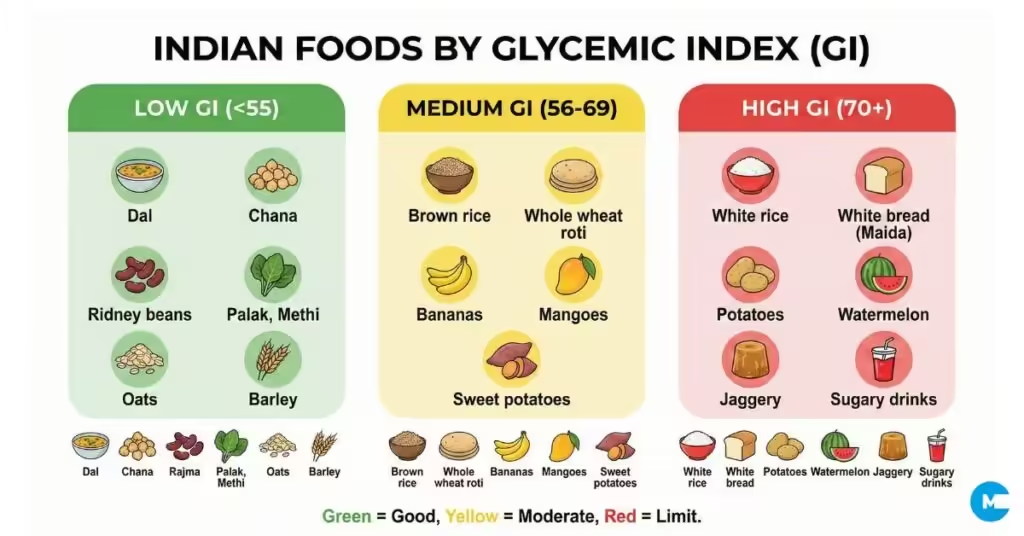
If you have diabetes or prediabetes, you’ve probably heard your doctor say “eat low GI foods.” But when you sit down for a traditional Indian meal, how do you know which foods are low GI and which aren’t? Is poha better than idli? Can you eat mangoes or not? What about your beloved rajma-chawal?
Understanding the glycemic index (GI) of Indian foods is crucial for managing diabetes, but most GI charts available online focus on Western foods. You need a comprehensive guide specifically for Indian cuisine—and that’s exactly what you’ll find here.
This article provides the most extensive glycemic index chart of Indian foods ever compiled, covering over 200 foods that Indians eat daily. You’ll learn not just the GI values, but also how to use this information to make smart food choices that keep your blood sugar stable while enjoying your cultural foods.
According to the Indian Council of Medical Research (ICMR), choosing low GI foods can improve blood sugar control, reduce HbA1c by 0.3-0.5%, and significantly reduce diabetes complications. Let’s dive into understanding GI and how to apply it to your daily diet.
For comprehensive diabetes management strategies, read our Complete Guide to Diabetes Management in India.
What is Glycemic Index (GI)?
The Glycemic Index is a ranking system that measures how quickly a carbohydrate-containing food raises blood glucose levels.
The Scale:
- Low GI: 55 or less
- Medium GI: 56-69
- High GI: 70 or above
How It Works:
Reference Food: Pure glucose is given a GI of 100 (sometimes white bread is used as the reference at GI 100).
Comparison: All other foods are compared to glucose. If a food has a GI of 50, it means it raises blood sugar 50% as much as pure glucose would.
Testing Process:
- Healthy volunteers eat a portion of food containing 50g of carbohydrates
- Blood glucose is measured at intervals over 2-3 hours
- The area under the blood glucose curve is compared to glucose/white bread
Why GI Matters for Diabetics:
Low GI Foods (55 or less):
- Digest slowly
- Release glucose gradually into bloodstream
- Cause smaller blood sugar spikes
- Keep you full longer
- Better for diabetes management
High GI Foods (70 or above):
- Digest quickly
- Release glucose rapidly
- Cause sharp blood sugar spikes
- Lead to crashes and cravings
- Poor for diabetes control
Understanding Glycemic Load (GL): The Missing Piece
While GI is important, Glycemic Load (GL) gives you the complete picture because it considers portion size.
The Formula:
GL = (GI × Carbohydrate grams per serving) ÷ 100
GL Categories:
- Low GL: 10 or less (Good)
- Medium GL: 11-19 (Moderate)
- High GL: 20 or above (Limit)
Why GL Matters:
Example: Watermelon
- GI: 72 (High)
- Carbs per serving (100g): 8g
- GL: (72 × 8) ÷ 100 = 5.76 (Low!)
What this means: Watermelon has high GI but low GL because it contains mostly water. A normal serving won’t spike blood sugar much.
Key Principle: Focus on GL for practical eating decisions, use GI for understanding food categories.
Factors That Affect GI of Indian Foods
Before we look at the charts, understand that GI isn’t fixed. These factors can change it:
1. Processing and Cooking:
- Milling: Removes fiber, increases GI (brown rice GI 50 vs white rice GI 73)
- Cooking time: Longer cooking increases GI (al dente pasta vs overcooked)
- Grinding: Increases GI (whole dal vs dal flour)
2. Ripeness:
- Unripe banana: GI 30
- Ripe banana: GI 60
3. Food Combinations:
- Fat + Carbs: Lowers GI (chapati with ghee is lower GI than plain chapati)
- Protein + Carbs: Lowers GI (rice with dal is lower than rice alone)
- Fiber + Carbs: Lowers GI (brown rice is lower than white rice)
4. Variety:
- Basmati rice: GI 58
- Jasmine rice: GI 109
- Hand-pounded rice: GI 50
5. Temperature:
- Hot rice: GI 72
- Cooled and reheated rice: GI 65 (resistant starch forms)
Practical Tip: Never eat high-GI carbs alone. Always pair with protein, healthy fats, or vegetables.
Complete Glycemic Index Chart of Indian Foods
(Note – Best to read on desktop or rotate your mobile horizontally)
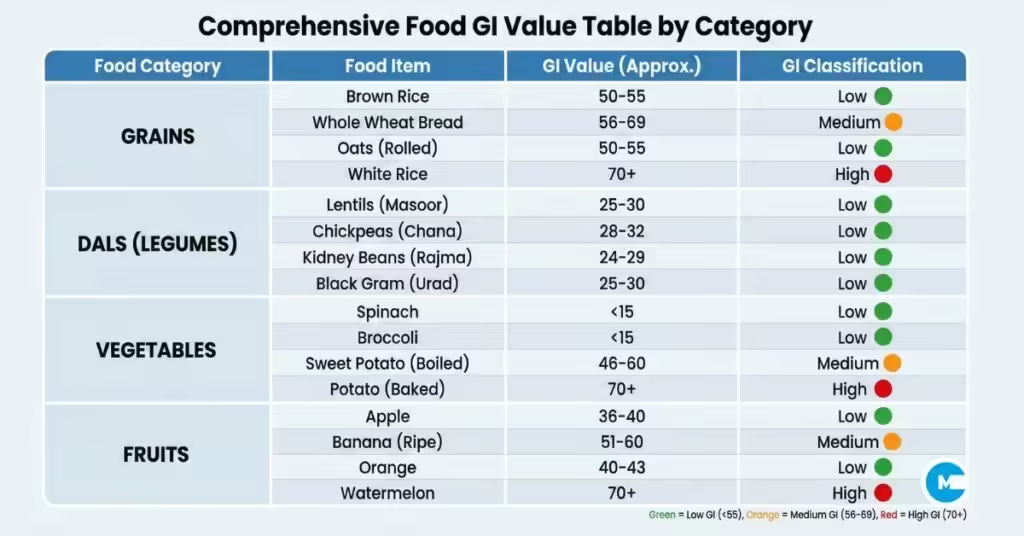
Cereals, Grains & Breads
| Food Item | GI | GL (per serving) | Category |
|---|---|---|---|
| RICE | |||
| White rice (polished) | 73 | 29 (1 cup) | High |
| Brown rice | 50 | 16 (1 cup) | Low |
| Basmati rice | 58 | 22 (1 cup) | Medium |
| Hand-pounded rice | 50 | 18 (1 cup) | Low |
| Red rice | 55 | 19 (1 cup) | Low |
| Black rice | 42 | 14 (1 cup) | Low |
| Parboiled rice | 47 | 17 (1 cup) | Low |
| MILLETS | |||
| Bajra (pearl millet) | 55 | 15 (1 cup) | Low |
| Jowar (sorghum) | 50 | 13 (1 cup) | Low |
| Ragi (finger millet) | 35 | 11 (1 cup) | Low |
| Foxtail millet | 50 | 14 (1 cup) | Low |
| Kodo millet | 50 | 12 (1 cup) | Low |
| WHEAT PRODUCTS | |||
| Whole wheat flour roti | 45-50 | 12 (1 roti) | Low |
| Refined flour (maida) roti | 71 | 25 (1 roti) | High |
| Multigrain roti | 45 | 10 (1 roti) | Low |
| Whole wheat bread | 71 | 9 (1 slice) | High |
| Multigrain bread | 52 | 8 (1 slice) | Low |
| White bread | 75 | 11 (1 slice) | High |
| Puri (fried) | 76 | 25 (1 puri) | High |
| OTHER GRAINS | |||
| Barley | 28 | 8 (1 cup) | Low |
| Quinoa | 53 | 13 (1 cup) | Low |
| Oats (rolled) | 55 | 11 (1 cup) | Low |
| Oats (instant) | 79 | 20 (1 cup) | High |
| Poha (rice flakes) | 76 | 17 (1 cup) | High |
| Brown rice poha | 65 | 14 (1 cup) | Medium |
| Corn flour | 70 | 21 (1 cup) | High |
Lentils, Pulses & Dals (Excellent for Diabetics!)
| Food Item | GI | GL (per serving) | Category |
|---|---|---|---|
| Moong dal (green gram) | 31 | 7 (1 cup) | Low |
| Chana dal (Bengal gram) | 8 | 3 (1 cup) | Low |
| Masoor dal (red lentils) | 26 | 5 (1 cup) | Low |
| Toor dal (pigeon pea) | 22 | 5 (1 cup) | Low |
| Urad dal (black gram) | 43 | 9 (1 cup) | Low |
| Rajma (kidney beans) | 24 | 7 (1 cup) | Low |
| Kabuli chana (chickpeas) | 28 | 8 (1 cup) | Low |
| Black chana | 10 | 3 (1 cup) | Low |
| Soya beans | 16 | 1 (1 cup) | Low |
| Green peas | 48 | 5 (1 cup) | Low |
| Lobia (black-eyed peas) | 42 | 8 (1 cup) | Low |
| Whole moong | 38 | 8 (1 cup) | Low |
| Sprouted moong | 25 | 4 (1 cup) | Low |
Vegetables (Most are Low GI!)
| Food Item | GI | GL (per serving) | Category |
|---|---|---|---|
| NON-STARCHY VEGETABLES (Eat Freely!) | |||
| Spinach (palak) | 15 | <1 | Low |
| Cabbage (patta gobi) | 10 | <1 | Low |
| Cauliflower (phool gobi) | 15 | <1 | Low |
| Broccoli | 10 | <1 | Low |
| Tomato | 15 | <1 | Low |
| Cucumber (kheera) | 15 | <1 | Low |
| Bitter gourd (karela) | 18 | <1 | Low |
| Okra (bhindi) | 20 | 2 | Low |
| Carrot (raw) | 16 | 1 | Low |
| Carrot (cooked) | 49 | 3 | Low |
| STARCHY VEGETABLES (Portion Control!) | |||
| Potato (boiled) | 78 | 20 (1 medium) | High |
| Potato (fried) | 95 | 25 (1 medium) | High |
| Sweet potato (boiled) | 63 | 18 (1 medium) | Medium |
| Sweet potato (baked) | 94 | 27 (1 medium) | High |
| Corn (fresh) | 52 | 15 (1 cup) | Low |
| Pumpkin (kaddu) | 75 | 5 (1 cup) | Low GL! |
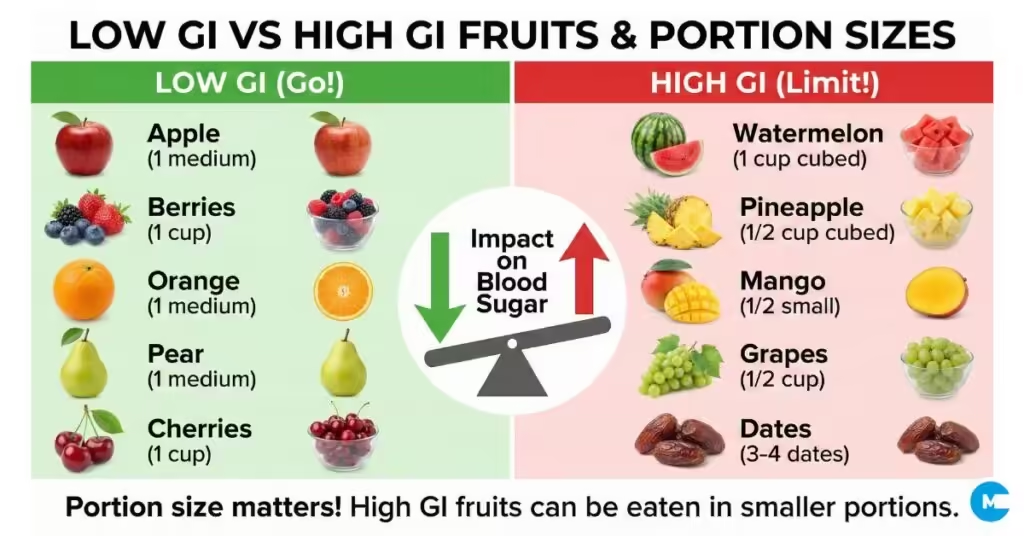
Fruits
| Food Item | GI | GL (per serving) | Category |
|---|---|---|---|
| LOW GI FRUITS (Good Choices) | |||
| Guava | 12-24 | 3 (1 medium) | Low |
| Apple (with skin) | 36 | 6 (1 medium) | Low |
| Pear | 38 | 4 (1 medium) | Low |
| Orange | 40 | 4 (1 medium) | Low |
| Strawberries | 40 | 1 (1 cup) | Low |
| Jamun (black plum) | 25 | 3 (1 cup) | Low |
| MEDIUM GI FRUITS (Small Portions) | |||
| Papaya | 60 | 9 (1 cup) | Medium |
| Grapes | 59 | 11 (1 cup) | Medium |
| Mango (ripe) | 51 | 8 (1/2 cup) | Low |
| Banana (ripe) | 60 | 16 (1 medium) | Medium |
| HIGH GI FRUITS (Limit) | |||
| Watermelon | 72 | 5 (1 cup) | Low GL! |
| Dates (dry) | 103 | 42 (2 dates) | High |
| Raisins | 64 | 28 (1/4 cup) | High |
Indian Breakfast Foods
| Food Item | GI | GL (per serving) | Category |
|---|---|---|---|
| Idli (white rice) | 77 | 26 (2 idlis) | High |
| Idli (brown rice) | 64 | 18 (2 idlis) | Medium |
| Dosa (plain rice) | 77 | 24 (1 dosa) | High |
| Ragi dosa | 65 | 16 (1 dosa) | Medium |
| Upma (semolina) | 68 | 16 (1 cup) | Medium |
| Upma (oats) | 55 | 11 (1 cup) | Low |
| Poha (white rice) | 76 | 17 (1 cup) | High |
| Moong dal cheela | 28 | 5 (2 cheelas) | Low |
| Besan cheela | 35 | 7 (2 cheelas) | Low |
| Dhokla | 48 | 12 (2 pieces) | Low |
Snacks & Indian Street Foods
| Food Item | GI | GL (per serving) | Category |
|---|---|---|---|
| HEALTHY SNACKS | |||
| Roasted chana | 28 | 7 (1/4 cup) | Low |
| Roasted peanuts | 14 | 1 (25g) | Low |
| Mixed nuts | 15 | 2 (25g) | Low |
| Makhana (fox nuts) | 50 | 5 (1 cup) | Low |
| INDIAN STREET FOODS (Avoid!) | |||
| Samosa | 82 | 28 (1 piece) | High |
| Kachori | 85 | 30 (1 piece) | High |
| Pakora/Bhajji | 76 | 22 (2 pieces) | High |
| Vada pav | 79 | 32 (1 piece) | High |
| Chips (potato) | 85 | 25 (25g) | High |
Dairy & Alternatives
| Food Item | GI | GL (per serving) | Category |
|---|---|---|---|
| Whole milk | 31 | 4 (1 cup) | Low |
| Yogurt (plain) | 36 | 3 (1 cup) | Low |
| Sweetened yogurt | 62 | 17 (1 cup) | Medium |
| Paneer | 0 | 0 | Low |
| Lassi (plain) | 33 | 4 (1 cup) | Low |
| Lassi (sweet) | 65 | 22 (1 cup) | Medium |
Sweets & Sugars (Limit Severely!)
| Food Item | GI | GL (per serving) | Category |
|---|---|---|---|
| White sugar | 100 | 10 (1 tbsp) | High |
| Jaggery (gur) | 84 | 8 (1 tbsp) | High |
| Honey | 58 | 10 (1 tbsp) | Medium |
| Gulab jamun | 88 | 35 (1 piece) | High |
| Jalebi | 85 | 32 (1 piece) | High |
| Barfi | 75 | 25 (1 piece) | High |
| Dark chocolate (70%+) | 23 | 6 (30g) | Low |
How to Use This GI Chart in Daily Life
Meal Planning Strategy:
- The 50-25-25 Plate Method:
- 50% Low-GI vegetables
- 25% Protein (dal, paneer, chicken, fish)
- 25% Low-GI carbs (brown rice, whole wheat roti, millets)
- Smart Swaps: Replace high-GI foods with similar low-GI alternatives:
- White rice → Brown rice or ragi
- Maida roti → Whole wheat or multigrain roti
- Potato → Sweet potato or yam
- Banana → Apple or guava
- Corn flakes → Oats
- Sugar → Small amount of honey
- GI-Lowering Combinations:
- Always add protein to carbs (rice + dal)
- Add healthy fats (roti + ghee in moderation)
- Include fiber (vegetables with every meal)
- Add acidic foods (lemon juice, vinegar, tomatoes)
- Portion Control: Even low-GI foods can spike blood sugar in large portions. Use the portion sizes listed in the GL column.
Special Tips for Indians
For Rice Lovers:
Can’t give up rice? Try these:
- Choose better rice: Brown, basmati, red, or hand-pounded rice (all GI 50-58 vs white rice GI 73)
- Cool it down: Let cooked rice cool, then reheat (forms resistant starch, lowers GI)
- Limit portion: Max 1/2 to 3/4 cup cooked rice
- Load up dal and vegetables: Make rice just 1/4 of your plate
- Add vegetables to rice: Vegetable pulao has lower GL than plain rice
For South Indians:
- Use brown rice for idli/dosa batter
- Add oats or ragi to idli batter
- Pair idli/dosa with sambhar (high protein, low GI)
- Limit to 2 idlis or 1 dosa per meal
- Choose upma made with oats or broken wheat
For North Indians:
- Always use whole wheat flour, not maida
- Add ragi or bajra flour to roti dough
- Pair parathas with yogurt and vegetables
- Limit to 2 small rotis per meal
For Gujaratis:
- Make dhokla with more dal, less semolina
- Choose handvo (mixed lentils and vegetables)
- Limit thepla to 2 pieces
- Avoid fried snacks like fafda and khandvi
Frequently Asked Questions
Should I only eat low-GI foods? No. The goal is to make low-GI foods 70-80% of your diet. Occasional medium-GI foods are fine. Always avoid high-GI foods except in emergencies (hypoglycemia treatment).
Why do different sources give different GI values? GI can vary based on variety, ripeness, cooking method, and testing methodology. Use the ranges as guides, not exact values.
Can I eat high-GI foods if I eat small portions? Small portions reduce glycemic load, making the impact less severe. However, it’s better to choose low-GI alternatives whenever possible.
Do I need to calculate GL for every meal? No. Focus on choosing mostly low-GI foods, controlling portions, and combining foods properly. GL calculations are helpful initially but become intuitive with practice.
Is GI different for everyone? Individual responses vary slightly, but GI rankings generally hold true across people. Monitor your own blood sugar response to foods.
Can cooking method change GI? Yes. Longer cooking, grinding, and pureeing increase GI. Al dente pasta has lower GI than overcooked pasta.
Downloadable Resources
Get Your Free PDF: Print-friendly version of this complete GI chart for your kitchen
- All 200+ foods organized by category
- Color-coded for easy reference
- Portion size guide included
- Shopping list template
Download Free PDF Chart (Note: Create this as a lead magnet)
Conclusion: Making GI Work for You
The glycemic index is a powerful tool, but it’s not the only factor in diabetes management. Use it alongside portion control, regular exercise, stress management, and medication (if prescribed).
Key Takeaways:
- Most dals and legumes are low GI (excellent!)
- Most vegetables are low GI (eat freely!)
- Choose brown/red rice over white rice
- Pair carbs with protein and vegetables
- Limit high-GI foods to rare occasions
- Portion size matters as much as GI
Start by making just one swap this week—perhaps brown rice instead of white rice at dinner. Small changes compound over time into better blood sugar control and improved health.
Related Articles:
- Complete Guide to Diabetes Management in India
- Best Indian Breakfast for Diabetics
- Prediabetes: How to Reverse It
- Diabetes-Friendly Snacks
About the Author
Dr. Rajesh Kumar, MBBS, MD (Endocrinology) Dr. Kumar has extensively researched the glycemic index of traditional Indian foods and helps patients adapt their cultural diet for optimal diabetes management.
Nutrition Consultant: Priya Sharma, MSc (Clinical Nutrition)
Last Updated: March 4, 2025
Next Review Date: September 2025
References
- Indian Journal of Endocrinology and Metabolism. Glycemic Index of Indian Foods. 2023.
- International Tables of Glycemic Index and Glycemic Load Values. Diabetes Care. 2021.
- Foster-Powell K, et al. International table of glycemic index. Am J Clin Nutr. 2002.