
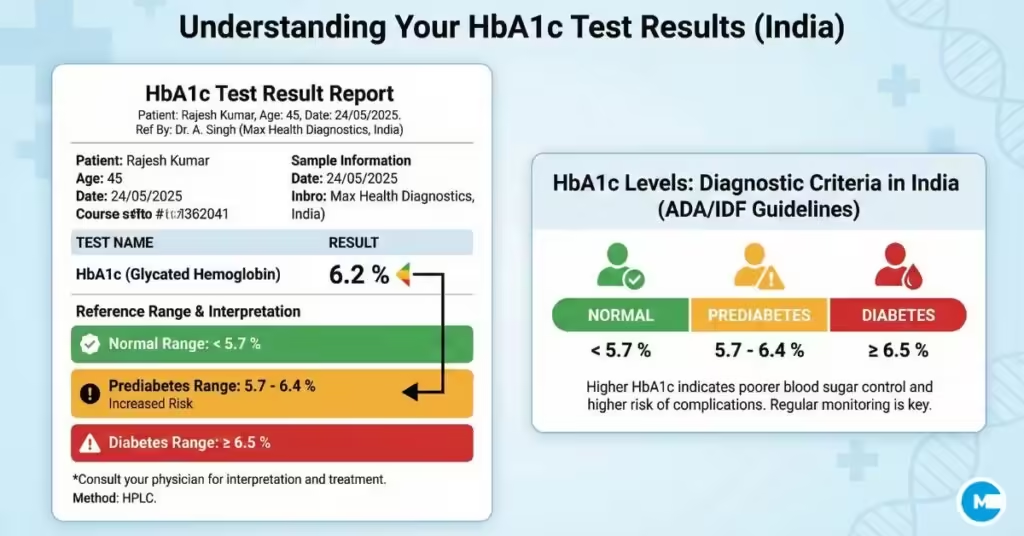
You just received your HbA1c test results, and the report shows “6.2%.” Is that good? Bad? What does it even mean? If you’re confused by diabetes test results, you’re not alone. Thousands of Indians get their HbA1c reports every day and don’t fully understand what the numbers are telling them about their health.
The HbA1c test is one of the most important blood tests for diabetes management, yet most people only know that “lower is better” without understanding why or what their specific number means. This lack of understanding can lead to poor diabetes management or unnecessary anxiety.
According to the Indian Council of Medical Research (ICMR), HbA1c testing has become the gold standard for diagnosing and monitoring diabetes in India. Unlike daily blood sugar tests that give you a snapshot of one moment, HbA1c reveals your average blood sugar control over the past 2-3 months. It’s like the difference between checking today’s temperature versus understanding the climate of an entire season.
In this comprehensive guide, you’ll learn everything about the HbA1c test—what it measures, how to interpret your results, what normal ranges are for Indians, how much it costs, and most importantly, how to improve your numbers naturally.
What is HbA1c (Glycated Hemoglobin)?
Let’s break down this medical term into simple language.
Hemoglobin: The protein in your red blood cells that carries oxygen throughout your body.
Glycated: When glucose (sugar) in your blood sticks to hemoglobin, it becomes “glycated” or “sugar-coated.”
HbA1c: The percentage of your hemoglobin that has glucose attached to it.
How It Works:
Think of hemoglobin as a sponge and glucose as water. The more “water” (glucose) in your blood, the more the “sponge” (hemoglobin) absorbs. Red blood cells live for about 120 days (3-4 months), so measuring how much glucose has attached to hemoglobin during their lifespan gives us a 2-3 month average of your blood sugar levels.
Why This Matters:
- Daily blood sugar tests show individual readings (affected by what you just ate, stress, exercise)
- HbA1c shows your overall glucose control over months
- Can’t be manipulated by fasting or eating less the day before
- Gives a true picture of diabetes management
For comprehensive diabetes management beyond testing, read our Complete Guide to Diabetes Management in India.
HbA1c Normal Range: What Your Numbers Mean
Standard Ranges:
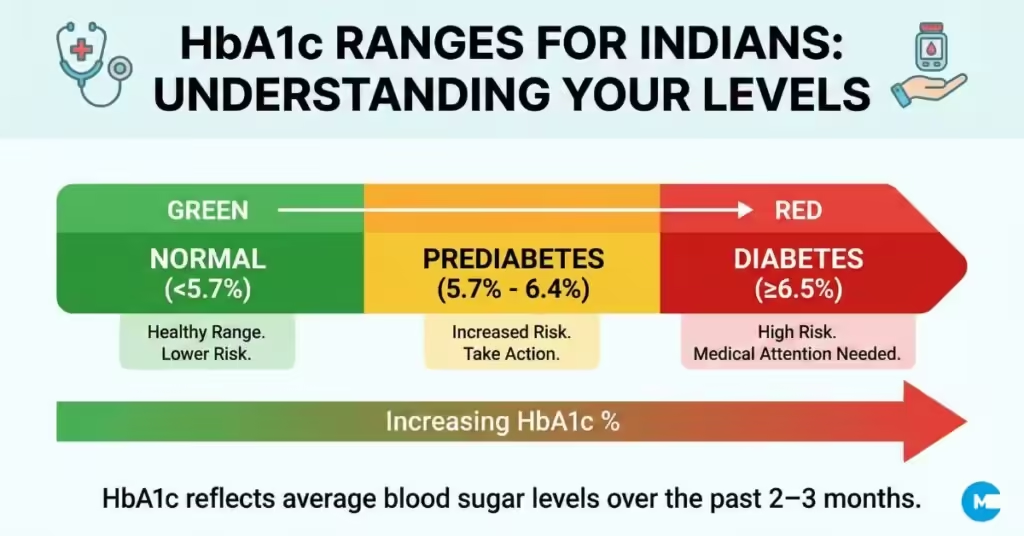
HbA1c Level | Category | What It Means |
Below 5.7% | Normal | No diabetes or prediabetes. Excellent blood sugar control. |
5.7% – 6.4% | Prediabetes | Blood sugar higher than normal but not yet diabetes. High risk of developing diabetes. Take action now! |
6.5% – 6.9% | Diabetes (Fair Control) | Diabetes diagnosis confirmed. Needs lifestyle changes and possibly medication. |
7.0% – 7.9% | Diabetes (Poor Control) | Blood sugar not well controlled. Increase medication/lifestyle efforts. |
8.0% – 8.9% | Diabetes (Very Poor Control) | Significant risk of complications. Immediate medical intervention needed. |
9.0% or higher | Diabetes (Uncontrolled) | Dangerous levels. Urgent doctor consultation required. |
Target HbA1c for Different Groups:
For Most Adults with Diabetes:
- Target: Below 7%
- Rationale: Reduces risk of complications significantly
For Younger Adults (under 60) without complications:
- Target: Below 6.5%
- Rationale: Prevents long-term complications
For Older Adults (70+) or with health issues:
- Target: 7.5-8%
- Rationale: Avoid hypoglycemia risk
For Pregnant Women with Diabetes:
- Target: Below 6% (stricter control needed)
- Rationale: Protects baby’s health
Important: Your doctor should set your individual target based on your age, diabetes duration, medications, and overall health.
Understanding the Relationship Between HbA1c and Average Blood Sugar
Your HbA1c percentage corresponds to an average blood glucose level. This helps you understand what your HbA1c means in terms of daily readings.
HbA1c to Average Blood Sugar Conversion:
HbA1c (%) | Average Blood Sugar (mg/dL) | Average Blood Sugar (mmol/L) |
5% | 97 | 5.4 |
6% | 126 | 7.0 |
7% | 154 | 8.6 |
8% | 183 | 10.2 |
9% | 212 | 11.8 |
10% | 240 | 13.4 |
11% | 269 | 14.9 |
12% | 298 | 16.5 |
Example: If your HbA1c is 7%, it means your average blood sugar over the past 2-3 months has been approximately 154 mg/dL.
Why This Matters: This helps you connect your daily blood sugar readings with your HbA1c result. If your home glucose meter shows readings consistently around 150-160 mg/dL, you can expect an HbA1c around 7%.
HbA1c vs Fasting Blood Sugar: What’s the Difference?
Many Indians get confused between these two tests. Here’s how they differ:
Fasting Blood Sugar (FBS):
- Measures blood glucose at one specific moment
- Requires 8-12 hours fasting
- Shows how well your body manages glucose overnight
- Can vary day to day
- Cost: ₹50-150
- Use: Quick screening, daily monitoring
HbA1c:
- Measures average glucose over 2-3 months
- No fasting required (can be done anytime)
- Shows overall diabetes control
- More stable, less daily variation
- Cost: ₹300-600
- Use: Diagnosis, long-term monitoring
Which is better? Both serve different purposes. FBS is good for daily monitoring, while HbA1c is better for seeing the big picture and adjusting long-term treatment.
For more on diagnostic tests, see: Fasting Blood Sugar Test: Everything You Need to Know.
How to Prepare for HbA1c Test
Good News: Minimal Preparation Required!
Unlike fasting blood sugar tests, the HbA1c test requires very little preparation:
Before the Test: ✅ No fasting needed – Eat normally ✅ No special diet changes – Results reflect past 2-3 months, not yesterday’s food ✅ Can be done anytime – Morning, afternoon, or evening ✅ Continue all medications – Don’t stop without doctor’s advice ✅ Stay hydrated – Drink water normally
What to Avoid: ❌ Don’t try to “improve” results by eating less the week before (doesn’t work) ❌ Don’t skip medications before the test ❌ Don’t panic or stress (won’t affect the results)
What to Bring:
- Doctor’s prescription (if required by lab)
- Previous HbA1c reports for comparison
- List of current medications
- Valid ID
HbA1c Test Cost in India & Where to Get It
Cost Breakdown:
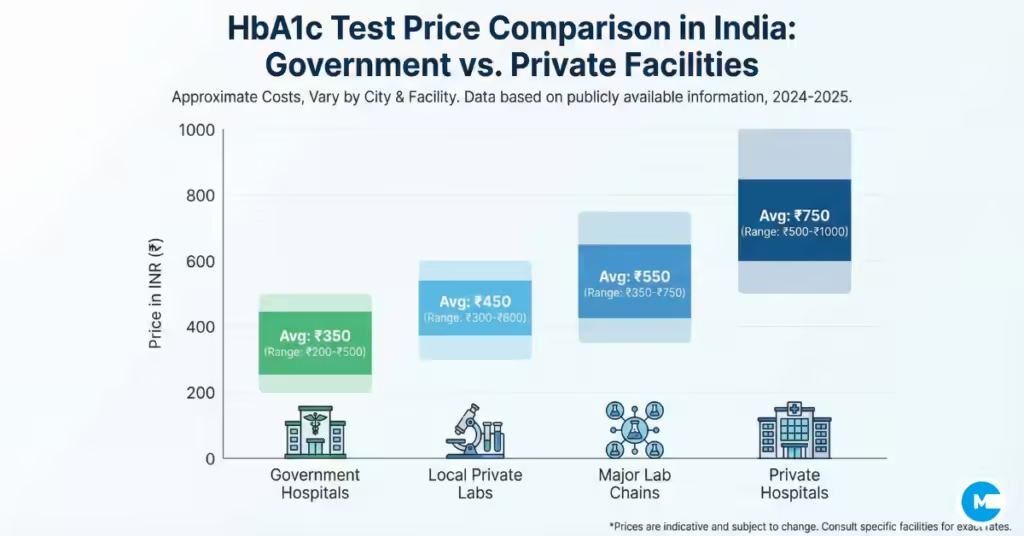
Government Hospitals:
- Price: ₹50-150 (heavily subsidized)
- Wait time: May be longer
- Quality: Reliable, certified labs
- Availability: All major government hospitals
Private Diagnostic Centers:
- Thyrocare: ₹300-400
- Dr. Lal PathLabs: ₹350-500
- Metropolis: ₹400-550
- SRL Diagnostics: ₹400-600
Home Collection Services:
- Additional cost: ₹50-100 for home visit
- Convenience: Blood sample collected at home
- Available through: Most private labs, PharmEasy, 1mg
Hospital Labs:
- Price: ₹500-800
- Advantage: Immediate doctor consultation available
How to Save Money:
- Use Government Facilities:
- AIIMS, government medical colleges
- District hospitals
- Primary Health Centers (PHCs)
- Often free or under ₹100
- Check for Packages:
- Diabetes screening packages (FBS + HbA1c + Lipids): ₹600-1000
- Usually cheaper than individual tests
- Use Health Apps:
- PharmEasy, 1mg, Netmeds offer discounts
- Cashback and coupon codes available
- Compare prices across platforms
- Annual Health Checkup Schemes:
- Many employers offer free annual checkups
- Government health schemes (Ayushman Bharat)
- Insurance company wellness programs
How Often Should You Test HbA1c?
Testing Frequency:
If You Don’t Have Diabetes:
- Age 35-45 with risk factors: Every 2-3 years
- Age 45+: Every 1-2 years
- High risk (prediabetes, family history): Annually
If You Have Prediabetes:
- Every 6 months to track progress
- Every 3 months if making aggressive lifestyle changes
If You Have Diabetes:
Well-controlled (meeting target):
- Every 6 months
Not meeting target or changing treatment:
- Every 3 months
Newly diagnosed or poorly controlled:
- Every 3 months until stable
On insulin therapy:
- Every 3 months (minimum)
Pregnant with diabetes:
- Monthly or as doctor recommends
Important: More frequent testing helps you and your doctor make timely adjustments to your treatment plan.
Factors That Can Affect HbA1c Results
While HbA1c is generally reliable, certain conditions can make results inaccurate:
Conditions That Falsely Lower HbA1c:
- Hemolytic anemia (red blood cells break down faster)
- Recent blood loss or transfusion
- Kidney disease with high EPO levels
- Certain medications (vitamin C in high doses)
Conditions That Falsely Raise HbA1c:
- Iron deficiency anemia
- Vitamin B12 deficiency (common in vegetarians)
- Certain hemoglobin variants
- Reduced kidney function
What This Means:
If you have any of these conditions, inform your doctor. They may use alternative tests like fructosamine or continuous glucose monitoring for more accurate assessment.
How to Improve Your HbA1c Levels
If your HbA1c is higher than your target, here’s how to bring it down:
Realistic Improvement Timeline:
With Aggressive Lifestyle Changes:
- Month 3: 0.5-1% reduction possible
- Month 6: 1-2% reduction possible
- Month 12: Up to 2-3% reduction possible
Example: Starting HbA1c of 9% can potentially reduce to 7% in 6 months with proper diet, exercise, and medication.
Proven Strategies:
- Diet Modifications:
- Switch to low glycemic index foods
- Reduce refined carbohydrates
- Increase fiber intake (30-35g daily)
- Control portion sizes
- Avoid sugary beverages completely
For specific diet guidance: Best Indian Breakfast for Diabetics: 15 Recipes.
- Regular Exercise:
- 30-45 minutes daily aerobic exercise
- 2-3 days strength training weekly
- Post-meal walks (especially after dinner)
- Target: 150 minutes per week minimum
For exercise routines: Best Exercises for Diabetes: 30-Minute Daily Routine.
- Weight Loss (if overweight):
- Lose 5-7% of body weight
- Even 3-5 kg can improve HbA1c by 0.5-1%
- Medication Adherence:
- Take all diabetes medications as prescribed
- Never skip doses
- Inform doctor if medications cause side effects
- Stress Management:
- Practice yoga or meditation
- Get 7-8 hours of quality sleep
- Manage work-life balance
- Regular Monitoring:
- Test blood sugar at home
- Track food, exercise, and readings
- Adjust based on patterns
Expected HbA1c Reduction:
Change Made | Expected HbA1c Reduction |
Losing 5-7% body weight | 0.5-1% |
Daily 30-min exercise | 0.5-0.7% |
Following low-GI diet | 0.3-0.5% |
Proper medication adherence | 1-2% |
All combined | 2-3% |
Common Questions About HbA1c
Can I reduce my HbA1c in 1 month? Significant reduction takes time. Since HbA1c reflects 2-3 months of blood sugar, you won’t see major changes in just 1 month. Expect meaningful improvements after 3 months of consistent effort.
Why is my HbA1c high even though my fasting sugar is normal? Fasting sugar only shows overnight control. Your post-meal sugars might be high, which HbA1c captures. Test blood sugar 2 hours after meals to get the full picture.
Can HbA1c be too low? Yes. Below 5% might indicate excessive hypoglycemia (low blood sugar episodes), especially in people taking insulin or sulfonylureas. This can be dangerous.
Does HbA1c show the same day’s blood sugar? No. It shows average over 2-3 months. Recent days have slightly more impact than 2-3 months ago, but one bad day won’t significantly change your HbA1c.
Is 6.5% HbA1c serious? 6.5% is the threshold for diabetes diagnosis. It’s not immediately dangerous but requires action to prevent complications. With lifestyle changes and medication if needed, it’s manageable.
Can stress increase HbA1c? Yes, indirectly. Chronic stress raises cortisol, which increases blood sugar over time, reflected in higher HbA1c.
Understanding Your HbA1c Trend
One HbA1c reading is useful, but tracking trends over time is more valuable:
Positive Trends:
✅ HbA1c decreasing over successive tests (e.g., 8% → 7.5% → 7%) ✅ Reaching and maintaining target range ✅ Stable readings in target range
Concerning Trends:
⚠️ HbA1c increasing despite treatment (e.g., 7% → 7.5% → 8%) ⚠️ Wide fluctuations between tests ⚠️ Unable to reach target despite efforts
Action Steps:
- Keep all your previous HbA1c reports
- Create a simple chart tracking your results
- Discuss trends with your doctor
- Adjust treatment plan based on trends, not single readings
Frequently Asked Questions
What’s better – HbA1c or daily glucose monitoring? Both are important. HbA1c shows long-term control, daily monitoring shows immediate patterns. Use both for comprehensive diabetes management.
Can I test HbA1c at home? Yes, home HbA1c test kits are available (₹800-1500), but lab testing is more accurate and recommended for official monitoring.
Does anemia affect HbA1c? Yes, certain types of anemia can give false results. Inform your doctor if you have anemia.
Is HbA1c accurate for all Indians? Generally yes, but certain genetic hemoglobin variants (rare in Indians) can affect accuracy. If your HbA1c doesn’t match your daily glucose readings, discuss with your doctor.
Conclusion: Your HbA1c is Your Report Card
Think of HbA1c as your diabetes report card every 3 months. It shows whether your efforts in diet, exercise, and medication are paying off. Unlike daily blood sugar readings that can fluctuate and cause anxiety, HbA1c gives you a calm, objective view of your overall diabetes management.
Key Takeaways:
- HbA1c shows 2-3 month average blood sugar
- Target below 7% for most diabetics
- Test every 3-6 months depending on control
- Costs ₹300-600 in India, much less at government facilities
- Can be improved with lifestyle changes and proper medication
- Track trends over time, not single readings
Don’t be discouraged if your first HbA1c is high. Focus on what you can control—your daily choices. Small, consistent improvements in diet and activity will show up in your next HbA1c test.
Related Articles:
- Complete Guide to Diabetes Management in India
- Prediabetes: How to Reverse It Before It’s Too Late
- 10 Early Diabetes Symptoms Indians Often Ignore
- Fasting Blood Sugar Test Guide
About the Author
Dr. Rajesh Kumar, MBBS, MD (Endocrinology) Dr. Kumar has interpreted thousands of HbA1c results over his 18 years at AIIMS, New Delhi. He believes in empowering patients to understand their test results and make informed decisions about their diabetes management.
Last Updated: February 28, 2025
Next Review Date: August 2025
Medical Disclaimer
This article provides general information about HbA1c testing and interpretation. Individual target ranges may vary based on age, diabetes duration, complications, and other health conditions. Always consult your doctor to understand what your specific HbA1c results mean for you and what your personal target should be. Never make medication changes based solely on HbA1c results without medical guidance.
References
- American Diabetes Association. Standards of Medical Care in Diabetes. Diabetes Care. 2024.
- Indian Council of Medical Research (ICMR). Guidelines for Diabetes Management. 2023.
- WHO. Use of Glycated Haemoglobin (HbA1c) in Diagnosis of Diabetes. 2011.