
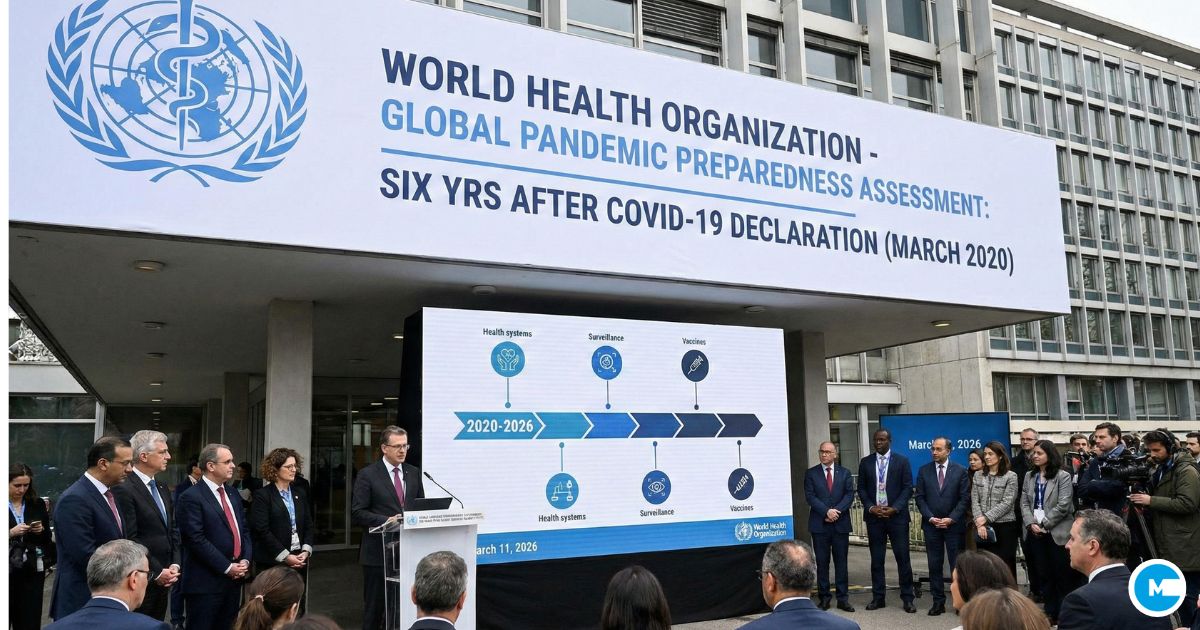
WHO Assesses Global Pandemic Readiness Six Years After COVID
According to WHO’s February 2 statement, the world is both better and worse prepared for pandemics since COVID-19. Improvements include new International Health Regulations amendments, $1.2 billion Pandemic Fund supporting 98 countries, and AI-powered surveillance in 110+ countries tracking emerging threats faster.
Read Full Report
The World Health Organization marked a sobering milestone on February 2, 2026 – exactly six years since Director-General Dr. Tedros Adhanom Ghebreyesus declared COVID-19 a Public Health Emergency of International Concern (PHEIC), the highest global alarm available under international law at the time. According to WHO’s official statement released that day, the organization posed a critical question to countries and partners: “Is the world better prepared for the next pandemic?” The answer, according to WHO, is complex – “yes and no.” While the PHEIC for COVID-19 was declared over in May 2023, the impact of the pandemic “remains etched in our collective memory and continues to be felt worldwide.” The assessment comes as WHO’s 158th Executive Board session convened February 2-7, 2026, to evaluate global health progress and challenges.
According to WHO’s comprehensive assessment, meaningful steps have strengthened pandemic preparedness since COVID-19. The most significant achievement is the adoption of amendments to the International Health Regulations (IHR), which entered into force in September 2025. These amendments strengthen national capacities and include a new “pandemic emergency” alert level designed to trigger stronger global cooperation before situations become catastrophic. The Pandemic Fund, cofounded and implemented by WHO and the World Bank, has provided grant funding totaling over $1.2 billion in its first three rounds, which helped catalyze an additional $11 billion supporting 67 projects across 98 countries in six regions. According to WHO data, genomic sequencing capacities globally have surged, with the International Pathogen Surveillance Network helping more than 110 countries strengthen genomic surveillance to track pathogens with epidemic and pandemic potential. WHO’s Hub for Pandemic and Epidemic Intelligence launched a major update of the Epidemic Intelligence from Open Sources (EIOS) system, leveraging AI to support more than 110 countries in identifying and reacting to new threats faster than ever before.
Despite this progress, WHO acknowledges that improvements remain “fragile and uneven, and more still needs to be done to keep humanity safe.” Twenty countries have completed Joint External Evaluations of their health security capacities, and 195 States Parties have filed annual IHR reports, but implementation varies dramatically between wealthy and low-income nations. Under the Pandemic Influenza Preparedness Framework, WHO signed eight new agreements in 2025, bringing the total to 19 contracts with pandemic products manufacturers, securing access to antivirals, diagnostics, syringes, and 900+ million vaccine doses for future influenza pandemics. However, according to WHO’s 2026 emergency appeal, humanitarian funding has fallen below 2016 levels, creating dangerous gaps in pandemic preparedness funding precisely when threats are increasing.
Six years after COVID-19’s global alarm, this assessment matters for everyone. Pandemics don’t respect borders – a disease outbreak anywhere threatens people everywhere. The progress made since 2020 – stronger disease surveillance, faster genomic sequencing, better international cooperation – benefits your family directly by enabling earlier detection and response to emerging threats. However, the uneven progress between countries creates dangerous weak points in global health security. If you’re concerned about future pandemics, support organizations working on global health preparedness and advocate with elected officials to maintain funding for pandemic prevention. The investments made now – in surveillance systems, laboratory capacity, healthcare infrastructure, and international cooperation – are dramatically cheaper than responding to pandemics after they spread. Every country needs strong public health systems, not just for pandemics but for everyday health threats. The $1.2 billion Pandemic Fund may sound expensive, but COVID-19 cost the global economy an estimated $14 trillion – prevention is always more cost-effective than crisis response. As WHO emphasized, these achievements “reflect a shared global commitment to work together across national borders, across sectors to never again face a pandemic unprepared and leave anyone behind.”
Public Health Angle: Pandemic preparedness investments protect everyone by enabling early detection and response to emerging disease threats. The $1.2 billion Pandemic Fund and AI surveillance systems represent cost-effective prevention compared to COVID-19’s $14 trillion economic impact. Global cooperation on health security saves lives and prevents economic catastrophe.
SOURCES:
- World Health Organization – “Six years after COVID-19’s global alarm: Is the world better prepared for the next pandemic?” (February 2, 2026)
- WHO Executive Board 158th Session – Official proceedings (February 2-7, 2026)
- Dr. Tedros Adhanom Ghebreyesus – WHO Director-General statements
- WHO Pandemic Fund – Official documentation on funding rounds
- WHO Hub for Pandemic and Epidemic Intelligence – EIOS system update details
- International Health Regulations (IHR) – September 2025 amendments documentation
DISCLAIMER: This article is based on official World Health Organization statements and documents released February 2, 2026. According to WHO’s published assessment, the statistics on the Pandemic Fund ($1.2 billion in grants catalyzing $11 billion total), genomic surveillance expansion (110+ countries), and International Health Regulations amendments (entered force September 2025) are accurate. All information comes from official WHO communications and Dr. Tedros Adhanom Ghebreyesus’s statements.