
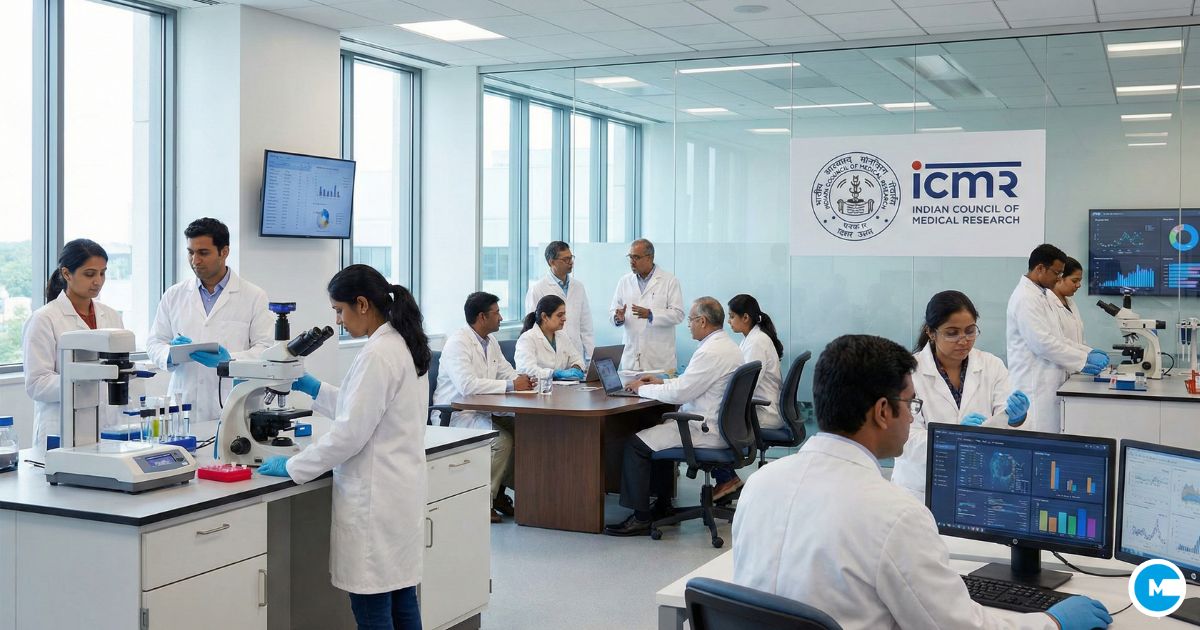
According to ICMR announcements, India’s Clinical Care Excellence Initiative seeks multi-centre clinical trials addressing non-communicable diseases through April 15, 2026. The program targets diabetes, heart disease, cancer, and chronic respiratory conditions, with a webinar scheduled February 13 to guide researchers through the application process.
Read Full Report
The Indian Council of Medical Research (ICMR) announced a significant new initiative in February 2026 called the “Clinical Care Excellence Initiative: Multi-centre Clinical Trials addressing Non-Communicable Diseases (NCDs).” According to the ICMR official website, researchers and medical institutions across India can submit expressions of interest through April 15, 2026, for funding to conduct large-scale clinical trials focused on chronic diseases affecting millions of Indians. Non-communicable diseases—including diabetes, heart disease, cancer, chronic respiratory conditions, and hypertension—account for over 60% of deaths in India annually. The initiative aims to develop India-specific treatment protocols and therapeutic approaches tailored to the country’s unique genetic, dietary, and environmental factors. A webinar is scheduled for February 13, 2026, to guide potential applicants through the submission process and requirements.
Multi-centre clinical trials involve conducting the same research protocol across multiple hospitals and medical centers simultaneously, allowing researchers to gather larger sample sizes and more diverse patient populations. According to ICMR’s framework, this approach is particularly crucial for India because treatment responses can vary significantly based on geographic location, genetic background, dietary patterns, and socioeconomic factors. For example, diabetes management strategies that work well in urban Delhi might need modification for rural populations in Kerala or Rajasthan. The Clinical Care Excellence Initiative will fund trials that address these variations and develop treatment protocols that work across India’s diverse population. Priority areas include cardiovascular disease prevention, diabetes management and prevention, cancer treatment optimization, and chronic respiratory disease care. This initiative builds on India’s recently released evidence-based lung cancer guidelines, showing ICMR’s commitment to developing comprehensive, India-specific clinical care standards.
According to ICMR’s call for proposals page, interested researchers can access the full application guidelines through the organization’s official website. The initiative also includes the Indo-Swiss Joint Research Programme (ISJRP) partnership between ICMR, India’s Department of Biotechnology (DBT), and the Swiss National Science Foundation (SNSF), with proposals accepted through May 5, 2026. This international collaboration brings Swiss medical research expertise together with Indian researchers to tackle healthcare challenges specific to India’s population. ICMR is simultaneously pursuing multiple research initiatives, including molecular diagnostic assay development for infectious diseases and gestational health studies, showing a comprehensive approach to improving India’s healthcare outcomes through evidence-based research.
This initiative represents hope for millions of Indians living with chronic diseases. Non-communicable diseases are no longer “diseases of the wealthy”—they now affect people across all economic levels, particularly in rural areas where healthcare access is limited. The research funded through this program will help develop treatment protocols that work for real Indian patients, not just adapted from Western research. If you have diabetes, heart disease, or other chronic conditions, ask your doctor about clinical trials in your area—participating in research helps advance medical knowledge while potentially accessing cutting-edge treatments. For healthcare professionals and researchers, this represents a significant funding opportunity to contribute to India’s medical knowledge base and improve outcomes for millions. The emphasis on multi-centre trials ensures findings will be applicable across India’s diverse geography and population. India is taking control of its healthcare destiny by developing evidence-based treatments specific to Indian needs rather than simply adapting foreign research.
Public Health Angle: This initiative addresses the critical need for India-specific medical research on chronic diseases. With NCDs causing over 60% of deaths in India, developing treatment protocols tailored to India’s unique genetic, dietary, environmental, and socioeconomic factors can dramatically improve health outcomes for hundreds of millions of people across the country’s diverse population.
SOURCES:
- Indian Council of Medical Research (ICMR) – Official Website
- ICMR Call for Proposals – “Clinical Care Excellence Initiative: Multi-centre Clinical Trials addressing Non-Communicable Diseases”
- ICMR Homepage Announcements (February 2026)
- ICMR Indo-Swiss Joint Research Programme (ISJRP) Call for Proposals 2026
- ICMR Webinar Schedule – February 13, 2026 session
DISCLAIMER: This article is based on official announcements and call for proposals from the Indian Council of Medical Research (ICMR). According to ICMR’s official website and published guidelines, the Clinical Care Excellence Initiative for multi-centre clinical trials on non-communicable diseases has a submission deadline of April 15, 2026, with a webinar scheduled for February 13, 2026. All program details and dates come directly from ICMR’s official communications.