
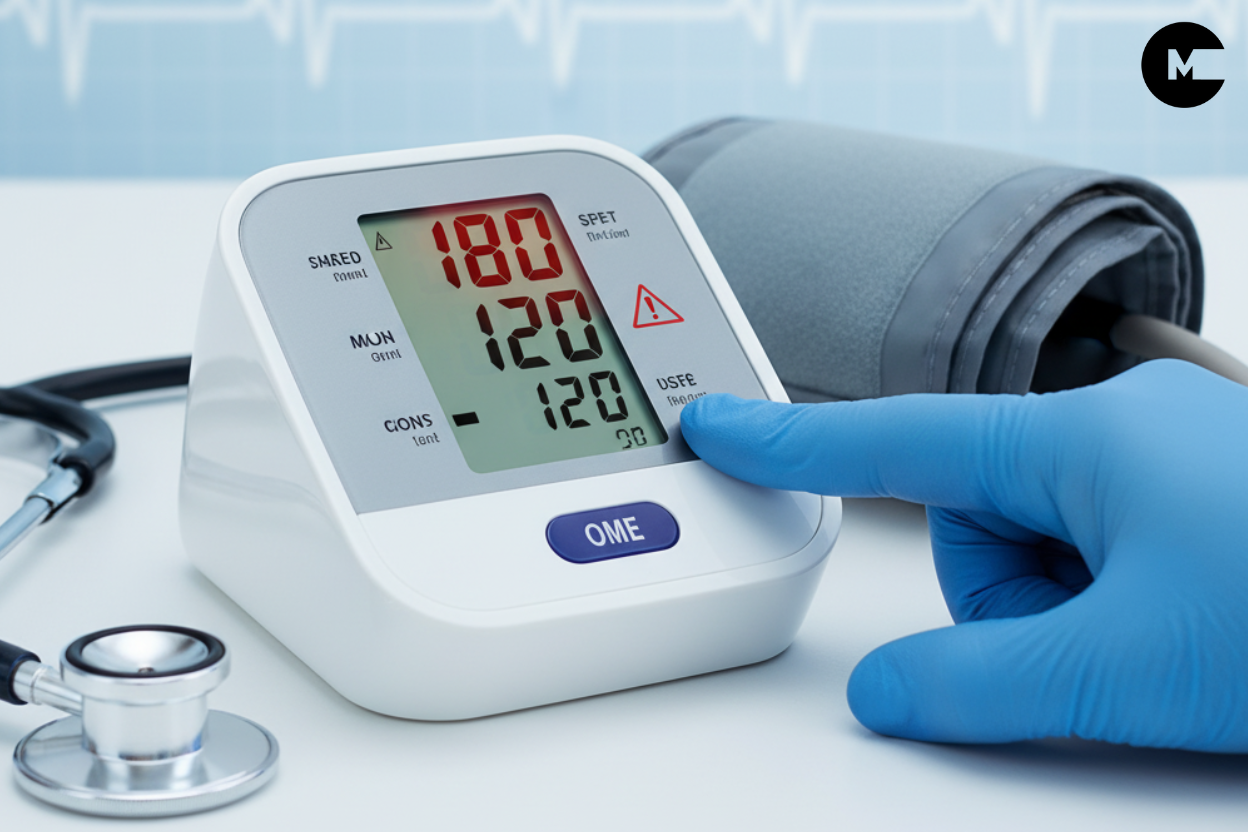
When your blood pressure reaches 180, you’re facing a potentially life-threatening medical crisis. Blood pressure readings of 180/120 mm Hg or higher are classified as a hypertensive crisis. requiring immediate medical attention to prevent serious organ damage or death.
This comprehensive guide explains what blood pressure 180 means, how to recognize the warning signs, when to seek emergency care, and how to prevent future episodes through treatment and lifestyle changes.
Understanding Blood Pressure 180 (What Is Blood Pressure 180?)
Blood pressure measures the force of blood against your artery walls, recorded as two numbers: systolic (top) over diastolic (bottom). Normal blood pressure is less than 120/80 mm Hg, while blood pressure 180/120 or higher represents a dangerous elevation far beyond typical hypertension.
Types of Hypertensive Crisis at 180
Hypertensive crisis includes two categories: hypertensive urgency (without organ damage) and hypertensive emergency (with acute organ damage).
Hypertensive Urgency: Blood pressure 180/120 or higher without symptoms of organ damage. Requires prompt medical attention within hours.
Hypertensive Emergency: Blood pressure 180/120 or higher with active organ damage, such as heart attack, stroke, kidney failure, or pulmonary edema. Requires immediate emergency room treatment.
How Common Is Blood Pressure 180?
Hypertensive crisis accounts for approximately 1% to 2% of emergency department visits in the United States. Most concerning, medication non-adherence is present in 50% to 80% of cases, making it the most preventable cause.
Recognizing the Signs and Symptoms of Blood Pressure 180
Emergency Warning Signs
Common symptoms include severe headache, severe anxiety, shortness of breath, nosebleeds, severe dizziness, blurred vision, chest pain, and difficulty speaking.
Call 911 immediately if you experience:
- Chest pain or tightness (heart attack)
- Severe headache with confusion or vision changes (stroke)
- Difficulty breathing (pulmonary edema)
- Seizures or loss of consciousness
- Weakness or numbness on one side (stroke)
- Severe back pain (aortic dissection)
The Silent Danger
Many patients with severely elevated blood pressure remain asymptomatic. You might feel completely fine while your blood pressure silently damages organs. This is why regular monitoring is critical, especially if you have hypertension history.
Serious Health Risks of Blood Pressure 180
Heart Attack and Cardiac Damage
The extreme pressure forces your heart to work harder, potentially causing heart muscle damage or heart failure. The 1-year mortality rate of hypertensive emergencies exceeds 79% if left untreated.
Stroke Risk
Blood pressure 180 can cause ischemic stroke (blocked blood flow) or hemorrhagic stroke (vessel rupture). Both can result in permanent brain damage or death without immediate treatment.
Kidney Damage and Failure
Hypertensive crisis can lead to acute kidney injury. The extreme pressure damages delicate kidney blood vessels, potentially causing acute or permanent kidney failure.
Other Serious Complications
- Hypertensive Encephalopathy: Brain swelling with headache, confusion, and altered mental status
- Vision Loss: Retinal blood vessel damage causing temporary or permanent vision problems
- Pulmonary Edema: Fluid accumulation in lungs causing severe breathing difficulty
When to Call 108 for Blood Pressure 180
Immediate Emergency (Call 108)
If blood pressure is 180/120 or higher WITH any symptoms indicating organ damage:
- Chest pain or pressure
- Severe headache with neurological symptoms
- Severe shortness of breath
- Seizures or altered consciousness
- Stroke symptoms (weakness, numbness, speech difficulty)
Urgent Care (Same Day)
If blood pressure is 180/120 or higher WITHOUT symptoms:
- Sit and rest for 5 minutes
- Recheck blood pressure
- If still elevated, contact your doctor immediately or visit urgent care
- Don’t wait more than a few hours for evaluation
Emergency Treatment for Blood Pressure 180
Hospital Protocol
Emergency treatment includes continuous monitoring, IV line placement, and diagnostic testing (ECG, blood tests, chest X-ray, CT scan if stroke suspected).
IV Medications
IV antihypertensive agents are preferred because they have rapid onset, short duration, and are easily titratable. Common medications include labetalol, nicardipine, clevidipine, and nitroprusside.
Blood Pressure Reduction Goals
The initial goal is to reduce mean arterial pressure by 10% to 20% in the first hour, then to 160/100 mm Hg within 2 to 6 hours. Gradual reduction prevents organ damage from rapid pressure drops.
For hypertensive urgency, blood pressure should be lowered gradually over 24 to 48 hours using oral medications.
Medical Treatment Options for Blood Pressure 180
Long-Term Medications
Common blood pressure medication classes include:
- ACE Inhibitors (lisinopril, enalapril): Block hormones that narrow blood vessels
- ARBs (losartan, valsartan): Similar to ACE inhibitors with fewer side effects
- Beta-Blockers (metoprolol, atenolol): Reduce heart rate and workload
- Calcium Channel Blockers (amlodipine, diltiazem): Relax blood vessels
Diuretics (hydrochlorothiazide): Remove excess sodium and water
Combination Therapy
Most patients with hypertensive crisis require multiple antihypertensive agents to achieve adequate control. Combining different medication classes provides better results than high doses of single medications.
Preventing Blood Pressure from Reaching 180
DASH Diet
The DASH diet can lower blood pressure as effectively as some medications, reducing systolic pressure by 8-14 mm Hg.
Focus on:
- Fruits and vegetables (4-5 servings each daily)
- Whole grains (6-8 servings daily)
- Lean proteins and low-fat dairy
- Nuts, seeds, and legumes
Limit:
- Red meat, sweets, and sodium
Sodium Reduction
Reducing sodium to less than 2,300 mg daily (ideally 1,500 mg for hypertension) significantly lowers blood pressure. Most dietary sodium comes from processed and restaurant foods, not the salt shaker.
Regular Exercise
Regular aerobic exercise can lower blood pressure by 5-8 mm Hg. Aim for 150 minutes of moderate-intensity activity weekly or 75 minutes of vigorous activity.
Weight Management
Losing just 5-10 pounds can significantly reduce blood pressure in overweight individuals. Each kilogram lost reduces systolic pressure by approximately 1 mm Hg.
Lifestyle Modifications
- Limit alcohol: No more than 2 drinks daily for men, 1 for women
- Quit smoking: Dramatically reduces cardiovascular risk
- Manage stress: Practice meditation, deep breathing, yoga, or other relaxation techniques
Get adequate sleep: Aim for 7-9 hours nightly
Home Blood Pressure Monitoring
Choosing a Monitor
Automatic upper arm monitors are recommended as they’re generally more accurate than wrist or finger monitors. Select a validated device with appropriate cuff size and memory function.
Proper Measurement Technique
Preparation:
- Avoid caffeine, exercise, and smoking 30 minutes before
- Empty bladder and rest 5 minutes
During measurement:
- Sit with back supported, feet flat, arm at heart level
- Place cuff on bare skin
- Don’t talk
- Take 2-3 readings, 1 minute apart
Monitoring Schedule
- Measure twice daily when first diagnosed or after medication changes
- Once stable, measure several times weekly
- Always measure at the same times for consistency
- Record all readings with date, time, and any symptoms
Living with High Blood Pressure: Long-Term Management
Medication Adherence
Non-adherence causes 50-80% of hypertensive crises. Strategies for consistency:
- Use pill organizers
- Set smartphone alarms
- Link medications to daily routines
- Use automatic pharmacy refills
- Address side effects promptly with your doctor
Regular Follow-Up
Close follow-up is essential as recurrence rates are high without proper management. Schedule:
- Weekly visits first month after crisis
- Monthly visits for 3-6 months once stable
- Every 3-6 months long-term if well-controlled
Creating a Management Plan
Work with your healthcare team to develop a personalized plan including:
- Specific medication schedule
- Target blood pressure goals
- Monitoring frequency
- Dietary and exercise goals
- When to seek medical attention
Blood Pressure 180 in Special Populations
During Pregnancy
Hypertensive disorders in pregnancy, including preeclampsia, can present with crisis-level pressures and require immediate evaluation. Blood pressure 160/110 or higher during pregnancy is extremely dangerous and can cause seizures, stroke, or placental abruption.
Elderly Patients
Older adults are more vulnerable to complications from both high blood pressure and rapid reduction. Treatment requires more gradual reduction and careful monitoring for side effects.
With Diabetes
The combination dramatically increases cardiovascular risk. ACE inhibitors or ARBs are preferred as they protect kidneys. Stricter blood pressure targets (typically less than 130/80 mm Hg) are recommended.
With Kidney Disease
Acute kidney injury is a common complication of hypertensive emergency. Existing kidney disease requires closer monitoring, medication dose adjustments, and often nephrology consultation.
Frequently Asked Questions
Can Blood Pressure 180 Go Down on Its Own?
While blood pressure fluctuates, 180/120 rarely returns to normal without intervention. Even asymptomatic severe hypertension requires medical evaluation and treatment. Rest 5 minutes and recheck, but if it remains elevated, seek same-day medical care.
How Fast Should It Be Lowered?
For emergencies, reduce by 10-20% in the first hour, then to 160/100 within 2-6 hours. For urgency without symptoms, reduce gradually over 24-48 hours. Rapid reduction can harm organs adapted to higher pressure.
Is It Always an Emergency?
No. Without symptoms of organ damage, it’s hypertensive urgency requiring same-day care but not 911. With symptoms indicating organ damage, it’s an emergency requiring immediate hospitalization.
Conclusion: Taking Control of Blood Pressure 180
Blood pressure 180 is serious but manageable. Without treatment, 1-year mortality exceeds 79%, but with proper management, most people achieve healthy control.
Key takeaways:
- Recognize the danger and act quickly
- Know when to call 911 (with symptoms) versus urgent care (without symptoms)
- Take medications consistently—non-adherence causes most crises
- Monitor blood pressure at home regularly
- Follow DASH diet, exercise, manage weight and stress
- Attend regular medical appointments
Prevention is possible through medication adherence, lifestyle changes, and regular monitoring. Every positive choice protects your heart, brain, kidneys, and life.
Remember: Blood pressure 180 is serious, but you’re not powerless. Thousands successfully manage hypertension daily through medication adherence, lifestyle changes, and regular monitoring.
Your next step is the most important. Choose one action above and take it right now.
Disclaimer: This guide is for educational purposes only and does not replace professional medical advice. Always consult your healthcare provider for personalized guidance. If experiencing a medical emergency, call 911 immediately.
Last Updated: November 2025 | Medically Reviewed